
Why Does Ozdikenosis Kill You? The Truth Behind the Viral Disease Search (2026 Guide)

If you’ve searched “why does ozdikenosis kill you,” you’re not alone. Thousands of people across the United States have typed this exact phrase into Google in recent months. It shows up in search suggestions. It shows up on social media. It even shows up in AI-generated content that sounds official but isn’t.
Here’s the short version. Ozdikenosis is not a recognised medical condition. It has no place in any medical databases, no disease registry entry, and no peer-reviewed research behind it. This guide walks you through why the term went viral, what real medical evidence looks like, and how to protect your own health literacy the next time a strange disease name starts trending.
Quick Answer: Does Ozdikenosis Actually Kill People?
No. It doesn’t. There’s no clinical evidence that Ozdikenosis exists as a disease, so there’s no way it could kill anyone. No death certificate has ever listed it. No hospital has ever diagnosed it. It simply hasn’t been through the process that turns a claim into a verified illness.
The phrase “why does ozdikenosis kill you” spread through curiosity, not through scientific evidence. People search first and fact-check later, if they fact-check at all. That gap is exactly how a fictional disease manages to feel real for a while.
What Is Ozdikenosis?
Ozdikenosis looks like a word invented online. No healthcare professional has traced it to a real patient, a real lab result, or a real case study. It reads like a medical term, which is part of the trick. The made-up name borrows the sound of real illnesses, so it slips past our guard.
When a strange disease name spreads, people jump to big conclusions fast. They imagine a new virus. They imagine a rare disorder hidden from the public. Some even lean toward conspiracy theories about cover-ups. None of that holds up here. There’s simply no epidemiological evidence to support any of it.
Is Ozdikenosis a Real Disease or an Internet Hoax?
Every real disease goes through the same basic checks before doctors accept it. Researchers look at clinical studies, hospital records, and medical journals. They check international disease classification systems. They wait for medical consensus among medical researchers before calling something a true illness.
Ozdikenosis fails every one of those checks. It has no entry in any disease classification system, no diagnostic history, and no support from health experts. That combination makes it a clear case of a medical hoax rather than a legitimate illness.
Read More About: TheLaptopAdviser Review 2026: Honest Gaming Laptop Tests & Buying Guide
Medical Verification Check
A simple disease verification table makes this easy to see.
| Source | Lists Ozdikenosis? |
| World Health Organization (WHO) | No |
| Centers for Disease Control and Prevention (CDC) | No |
| National Institutes of Health (NIH) | No |
| PubMed | No |
| ICD disease classification | No |
Five major sources. Zero results. That’s about as close to proof of absence as health fact-checking gets.
Where Did the Ozdikenosis Myth Come From?
Nobody can point to one clear starting spot. The trail runs through online forums, meme culture, and short-form video platforms. Somewhere along the way, a made-up word turned into a full-blown internet rumour.
Once that happened, the pattern was predictable. People searched “what is ozdikenosis?” Then they searched “why does ozdikenosis kill you?” Each search fed the next, even though the disease itself never existed anywhere outside the internet.
Why Is “Why Does Ozdikenosis Kill You” Trending Online?
This trend says more about human behaviour than it says about medicine. It’s a case study in misinformation psychology, wrapped inside a catchy, scary-sounding phrase.
Search behaviour rewards curiosity. Platforms reward engagement. Put those two things together, and a fake illness can climb the charts just as fast as a real health story, sometimes faster.
Social Media Curiosity
Strange, unfamiliar words spread fast on social platforms. People share them because they sound mysterious, not because anyone has confirmed they’re real. This is classic social influence at work, where one share convinces the next person to look closer.
AI-Generated Content
Many websites now use AI-generated content to chase trending health searches. These articles often get published without any real health fact-checking. That’s exactly how unreliable medical advice ends up ranking near the top of search results.
Search Engine Autocomplete
Once enough people type the same phrase, Google autocomplete starts suggesting it to everyone else. This is pure search behaviour, driven by search volume, not by medical truth. The algorithm doesn’t know the difference between a real illness and a rumour.
Clickbait Headlines
Words like “deadly,” “fatal,” and “hidden” pull in clicks. This is clickbait in its purest form. Emotional language beats accurate language almost every time, at least in terms of raw traffic.
Viral Misinformation Loops
One viral post leads to more searches. More searches lead to more content. More content leads to more searches again. This loop is how viral misinformation keeps a fictional disease alive long after it should have faded away.
Why Fake Diseases Spread Faster Than Real Medical Information
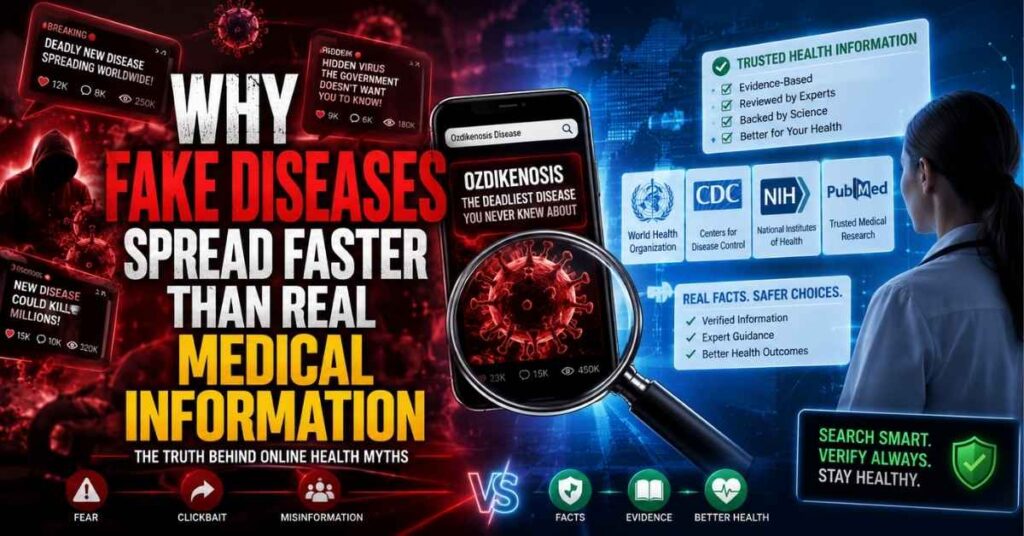
Fear travels fast. Reassurance travels slowly. That single fact explains most of what happens with health myths debunked long after they’ve already caused damage. Human brains are wired to notice threats first and verify them second, which gives fake disease names a huge head start.
Add algorithms into the mix, and the problem grows. Platforms don’t rank content by accuracy. They rank it by engagement. A scary, false claim about Ozdikenosis can outperform a calm, accurate article, simply because fear holds attention longer than facts do.
Fear Creates More Clicks
Fear-based content grabs attention instantly. Our brains evolved to notice danger first and ask questions later. A headline about a deadly new illness triggers that same old instinct, even when the illness is completely made up.
Confirmation Bias
Confirmation bias makes people accept claims that match what they already fear. If someone already worries about their health, a scary headline about Ozdikenosis feels like confirmation, not coincidence.
Emotional Headlines
A headline like “Deadly new disease discovered” spreads far faster than “No evidence found.” Emotional headlines simply outperform neutral ones, which is why so many low-quality sites lean on them.
Read More About: Playing Games Blog PlayBattleSquare: Complete Guide (2026) to Improve Your Gaming Experience
Repeated Exposure
Seeing the same claim again and again creates a strange effect. It starts to feel true, even without any real backing. This is a well-known part of misinformation psychology, and it works on almost everyone at some point.
Algorithmic Recommendations
Search engine algorithms often promote whatever keeps people scrolling. That usually means emotional, dramatic content rises to the top, regardless of whether it holds up to evidence-based medicine.
Does Ozdikenosis Have Any Real Symptoms?
Many websites list symptoms for Ozdikenosis. None of them come from clinical diagnosis or actual patient records. These are fake symptoms, dressed up to look convincing.
Claimed vs Verified Symptoms
| Claimed Symptom | Verified by Medical Evidence? |
| Fatigue | No |
| Fever | No |
| Organ failure | No |
| Neurological symptoms | No |
| Death | No documented cases |
Notice something important here. Every symptom on that list also shows up in dozens of real conditions. That overlap is exactly why the list feels believable at first glance.
Why People Believe They Have It
Symptom overlap plays tricks on the mind. Fatigue, fever, and brain fog show up in hundreds of unrelated conditions, from common colds to stress to poor sleep. Once someone reads a scary list of unexplained symptoms, their brain starts hunting for a match. A basic symptom checker search can turn a normal headache into a source of illness anxiety within minutes.
What Actually Makes a Disease Fatal?
Real diseases become life-threatening through clear, documented biological pathways. Doctors can trace these pathways with laboratory testing, imaging, and physical exams. Nothing about a real fatal illness relies on guesswork or viral rumours.
This section matters because it shows the sharp contrast between actual medicine and internet noise. Evidence-based healthcare always points to a specific, measurable cause of death, never a vague, unexplained one.
Organ Failure
Organ failure happens when one or more body systems stop working properly. It can follow severe infection, trauma, or long-term disease. Doctors track it through blood tests, scans, and direct clinical observation.
Severe Infection and Immune Overload
Sepsis is one of the clearest examples of a real medical emergency. It happens when the immune system overreacts to infection and starts damaging the body’s own tissue. This is a well-documented, heavily studied condition, unlike anything tied to Ozdikenosis.
Oxygen Deprivation
Respiratory failure and oxygen deprivation occur when the body can’t get enough air into the bloodstream. Stroke symptoms often involve a similar problem, just localized to the brain instead of the lungs. Both are medical emergencies with decades of research behind them.
Progressive Disease Damage
Some diseases build slowly instead of striking all at once. Heart failure often develops this way, worsening over years through gradual damage to the heart muscle. This kind of decline shows up clearly on medical charts, something that has never happened with Ozdikenosis.
Could Ozdikenosis Be Confused With a Real Disease?
Yes, in a strange way, it can. Not because Ozdikenosis is real, but because its claimed symptoms overlap so heavily with common conditions. That overlap creates confusion, especially for anyone already dealing with stress or a mild illness.
Similar Medical Conditions
Conditions like chronic fatigue syndrome, viral infections, and certain autoimmune disorders can produce fatigue, fever, and body aches. These are documented through differential diagnosis, a process where doctors compare symptoms across multiple possible conditions before settling on one.
Why Symptoms Can Overlap
Fatigue and fever appear in almost every category of illness, from a simple cold to a serious autoimmune disorder. This broad symptom overlap is exactly why vague online symptom lists feel convincing. They’re built from common, non-specific complaints rather than anything unique to a real, named condition.
The Real Risks of Believing Viral Health Myths
Believing in a fake illness rarely stays harmless. It can shape real decisions, waste real time, and create real stress. This is where online health myths stop being funny and start becoming a genuine problem.
The risks build on each other, too. One bad decision, like skipping a doctor’s visit, often leads to another, like relying on a stranger’s advice instead. That chain of events is where actual harm begins.
Delayed Medical Treatment
Someone dealing with a real illness might waste valuable time chasing a fake one instead. That delay can turn a manageable problem into a serious one, especially with anything involving emergency symptoms.
Self-Diagnosis
Self diagnosis through internet searches is often unreliable. A symptom checker can’t replace a medical evaluation from a trained professional. Matching symptoms to a random online list isn’t the same as a real clinical diagnosis.
Health Anxiety
Health anxiety grows fast when fear-based content floods someone’s feed. Reading about a fake deadly disease, over and over, can trigger real panic, even without a single actual symptom to justify it.
Spreading False Information
Sharing an unverified claim adds to the problem. Every repost of a false health claim makes the myth look more credible to the next person who sees it.
Distrust in Healthcare Professionals
Repeated exposure to health hoaxes can quietly damage trust in real healthcare providers. Once someone starts doubting official sources, they become more open to conspiracy theories, which only makes the cycle worse.
How Doctors Verify Whether a Disease Is Real
Doctors don’t rely on trending searches. They rely on structured, careful processes built over decades of evidence-based medicine. This process is slow on purpose. Slow means careful, and careful means accurate.
Every step exists to filter out noise. A claim has to survive research, testing, and expert review before it earns a spot in official medical records.
Medical Research
Real diseases go through clinical studies, published in respected medical journals. These studies get reviewed by other experts before publication, a process known as peer-reviewed research.
Diagnostic Criteria
Every recognised illness has clear diagnostic criteria. These criteria explain exactly what symptoms, test results, and patterns must appear before a clinical diagnosis can be made.
Trusted Medical Databases
Confirmed diseases appear in medical databases like PubMed and official disease registries. Ozdikenosis appears in none of them, which tells you everything you need to know about its legitimacy.
Trusted Sources for Verifying Medical Information
Whenever an unfamiliar disease name pops up, checking a trusted health source takes less time than most people think. A quick search on an official health organisation website usually settles the question fast.
Sticking to these sources also builds long-term digital literacy. Once you know where to look, viral health scares lose most of their power over you.
| Source | What It Offers |
| World Health Organization (WHO) | Global disease tracking and public health guidance |
| Centers for Disease Control and Prevention (CDC) | US-based disease data and disease prevention advice |
| National Institutes of Health (NIH) | Research-backed public health information |
| MedlinePlus | Easy-to-read, government-run health education resource |
| Mayo Clinic | Trusted clinical explanations from medical professionals |
Government Health Agencies
The WHO, CDC, and NIH all track confirmed illnesses using international health standards. If a disease existed, one of these three would already have a record of it.
Peer-Reviewed Medical Journals
Legitimate research passes through expert review before publication. This is exactly the kind of scientific validation that Ozdikenosis has never received.
Hospital and University Resources
Sites like Mayo Clinic and MedlinePlus translate complex medical terminology into language regular readers can understand, without sacrificing accuracy.
Read More About: Keine Karriere-Subdomain Gefunden: Ultimate Guide to Fix This Critical Error (2026)
Real Medical Emergencies You Should Never Ignore
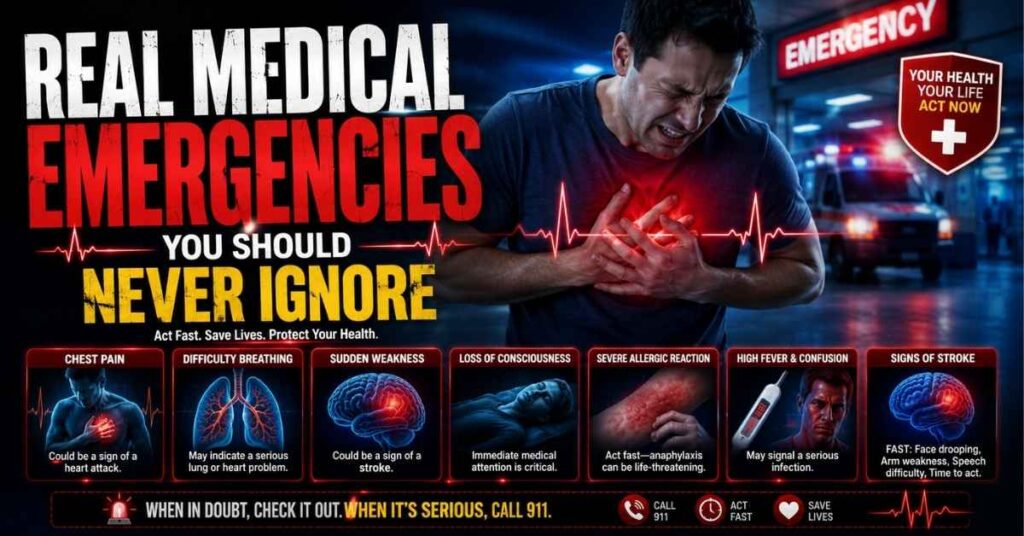
Viral trends come and go, but real emergency symptoms deserve serious attention every single time. Recognising true warning signs could genuinely save a life, including your own.
| Symptom | Why It Matters |
| Difficulty breathing | May signal respiratory failure or severe allergic reaction |
| Chest pain | Common early sign of heart-related emergencies |
| Loss of consciousness | Can point to serious neurological symptoms or cardiac issues |
| Stroke symptoms | Sudden weakness, confusion, or slurred speech require urgent care |
| Severe allergic reactions | Can escalate quickly and affect breathing |
If any of these happen, contact a qualified physician or seek emergency medical care immediately. Don’t wait to search online first.
Why Search Engines Sometimes Surface Fake Medical Topics
Search engines reflect curiosity, not truth. They show people what other people are already searching for, which explains how something like Ozdikenosis can climb so high without a shred of medical evidence behind it.
This isn’t a flaw unique to one platform. It’s simply how search engine algorithms work across the board, and it’s worth understanding if you want to spot the next fake trend early.
Autocomplete Suggestions
Popular searches naturally appear as search suggestions. This is a reflection of keyword popularity, not a stamp of medical approval.
Search Volume Snowball Effect
More searches create more visibility, and more visibility creates even more searches. This cycle is a textbook example of trending health searches growing beyond their actual importance.
AI Content Farms
Many sites publish AI-generated health content purely to capture traffic from trending terms, without checking a single fact first.
Low-Quality SEO Websites
Some websites exist only to rank for popular terms. These sites often spread misleading online articles filled with misleading health information.
User Curiosity Signals
Search engines respond to online curiosity, not accuracy. They can’t tell the difference between someone researching a real illness and someone chasing a viral rumour.
Fact vs Fiction About Ozdikenosis
Here’s a clear side-by-side comparison to settle the confusion once and for all.
| Fact | Fiction |
| No recognised medical disease exists called Ozdikenosis | It is a deadly newly discovered disease |
| Medical databases contain no verified diagnosis | Millions are secretly infected |
| Viral searches don’t prove a disease exists | Google searches confirm medical facts |
As the table shows, fact vs fiction here isn’t close. Every fictional claim collapses the moment it meets real medical evidence.
What Should You Do If You Discover an Unknown Disease Online?
The next time a strange disease name shows up in your feed, slow down before reacting. A short pause and a quick check usually clears up the confusion within minutes.
This approach protects both your peace of mind and your actual health. Panic rarely helps, but a little critical thinking almost always does.
Verify the Source
Check the claim against WHO, CDC, NIH, or PubMed before believing it. If none of them mention it, treat the claim as unreliable medical advice.
Focus on Symptoms Instead of Disease Names
Describe your actual symptoms to a doctor rather than searching for a scary label. A proper symptom assessment from a professional beats any online guess.
Consult a Healthcare Professional
If something feels wrong, consult a doctor instead of a search engine. A healthcare provider can run real tests and give you an actual answer.
Avoid Self-Diagnosis
Resist the urge to diagnose yourself using internet lists. Self diagnosis skips the training, tools, and context a real medical consultation provides.
The Bigger Lesson Behind the Ozdikenosis Phenomenon
The viral spread of “why does ozdikenosis kill you” reveals something bigger than one fake illness. It shows how fast misinformation online can travel in a world built for speed instead of accuracy.
Information now moves far faster than verification ever can. A strange phrase can become a global search trend within days. That speed says nothing about whether the claim is true.
Why Critical Thinking Matters
Digital literacy matters more than ever. Before sharing an alarming health claim, ask a simple question. Can this be confirmed through a reliable health information source?
How Medical Misinformation Spreads
Misinformation spreads through a mix of fear, algorithms, and repetition. Understanding this pattern helps you spot the next fake trend before it fools you.
Protecting Yourself From Health Hoaxes
Stick to trusted health sources, question dramatic headlines, and lean on real medical consultation whenever your health is actually on the line.
Frequently Asked Questions
Is Ozdikenosis a real disease?
No. It has no listing in any medical databases, and no healthcare professional has ever diagnosed it.
Why does Ozdikenosis sound so convincing?
It borrows real medical terminology and pairs it with common symptoms, which creates a false sense of legitimacy.
Can fake diseases become viral?
Yes. Viral misinformation spreads through curiosity, algorithms, and repetition, regardless of whether the underlying claim is true.
What should I do if I have worrying symptoms?
Contact a qualified physician and describe your symptoms directly. Skip the internet searches and go straight to professional diagnosis.
Can Google search suggestions be inaccurate?
Yes. Search engine suggestions reflect popularity, not truth. Popularity and accuracy are two completely different things.
Conclusion
Ozdikenosis is not a real illness. No official health organisations recognise it, no clinical studies support it, and no verified illness record exists anywhere. The entire trend grew out of online curiosity, viral sharing, and a search algorithm doing exactly what it’s built to do.
The real takeaway here goes beyond one made-up disease name. Build the habit of checking claims against trusted health sources before you believe them or share them. That single habit protects your health, your peace of mind, and the people around you from unnecessary internet panic.


